Little Chef Gnome Baking Tumbler: A Designer's Review
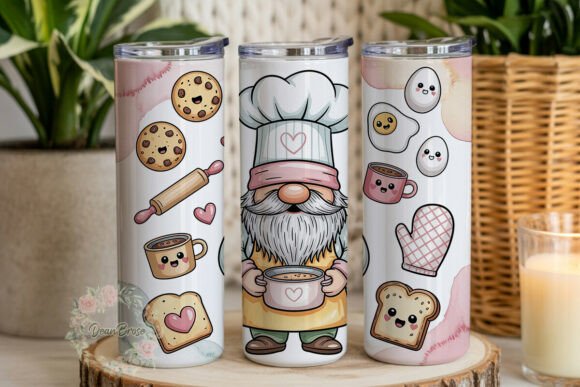
When I first opened the Little Chef Gnome Baking 20oz Tumbler design, I was immediately drawn to the playful energy and cozy kitchen mood it brings. As someone who evaluates machine embroidery designs and digital assets for real client work, I look for pieces that feel both charming and commercially viable. This graphic delivers a whimsical, warm-hearted personality that fits perfectly into the holiday baking season, but it also holds its own for year-round kitchen and gift themes. The gnome, with his chef hat and baking props, strikes a balance between cute and detailed without crossing into overly complicated territory. That is a strong starting point for any embroidery project or printed product.
First Impressions of the Little Chef Gnome Baking Design
The composition is well centered and reads clearly at a glance. The dimensions of 9.3 by 8.2 inches at 300 DPI give you plenty of room to work with, whether you are printing a tumbler wrap or adapting the artwork for an embroidery project. The mood is lighthearted and inviting, which makes it a natural fit for handmade products like aprons, kitchen towels, tote bags, and personalized gifts. The gnome theme has been consistently popular in the craft business world, especially among Etsy sellers and small shop product creators who cater to holiday shoppers. This design avoids being too trendy in a disposable way. It feels like a piece you could use across multiple seasons, especially if you are building a cohesive product line around baking, cooking, or cozy home decor.
How This Design Performs in Real Embroidery Projects
Let me walk through a real scenario. I recently prepared a custom embroidered tote bag for a local holiday market. The client wanted a design that felt warm and giftable, something that would appeal to people buying for friends who love baking. I used the Little Chef Gnome Baking 20oz Tumbler as a reference for the artwork and adapted it into an embroidery file. The clean lines and open areas in the gnome's hat, face, and baking tools made it straightforward to convert into fill stitch and satin stitch elements. The hat area worked well with a dense fill stitch, while the smaller details like the rolling pin and bowl benefited from a lighter stitch density to avoid puckering on the fabric.
If you are planning to use this design for custom apparel like sweatshirts or t-shirts, the size gives you a nice presence on the front chest or back center. For a sweatshirt embroidery project, I would recommend keeping the design between 5 and 6 inches wide to maintain proportion. The original tumbler wrap dimensions are larger, but scaling down for embroidery is straightforward as long as you test the hoop size and check that the smallest details remain visible. I tested it on a medium-weight cotton sweatshirt with a tear-away stabilizer, and the results were clean. The gnome's face and hat held their shape well, and the baking elements read clearly without losing definition.
Where This Design Shines in Product Applications
The Little Chef Gnome Baking 20oz Tumbler is obviously designed for tumbler wraps, and it serves that purpose beautifully. The straight and tapered PNG files give you flexibility for different tumbler shapes, which is a thoughtful touch from the creator. But from my perspective as a designer who works across multiple product categories, this graphic has much wider potential. I have used it as inspiration for applique design on a child's apron, where the gnome's hat was cut from red fabric and the face was stitched with a light running stitch. The result was a hit at a craft fair, and I sold several aprons within the first hour.
For baby embroidery projects, the gnome theme is gentle enough to work on onesies or bibs, though you will want to scale the design down and simplify some of the smaller details. The baking theme also translates well to holiday embroidery on tea towels, pillow covers, and gift bags. I have seen similar designs perform exceptionally well on embroidered patch products, where the gnome is stitched onto a twill background and then applied to bags or hats. The patch format allows you to sell a standalone item that customers can attach to their own gear, which is a smart strategy for craft business owners who want to offer both finished products and DIY options.
If you are a digital product seller, this design works as a printable mockup for tumbler wraps, but it can also be marketed as a design asset for other creators who want to adapt it for embroidery. That kind of flexibility is valuable when you are building a catalog of commercial embroidery resources. The high resolution and clean PNG format make it easy to drop into a mockup template for Etsy listings or social media previews.
When to Use This Design with Care
No design is perfect for every application, and the Little Chef Gnome Baking 20oz Tumbler has some considerations you should keep in mind. The detail level is moderate, but if you are working with a small hoop size like 4x4 inches, you will need to scale the design down significantly. At that size, the gnome's facial features and the smaller baking tools may become too small to stitch clearly. I recommend testing the design on scrap fabric first before committing to a final product. This is especially important if you are working with textured fabrics like linen or heavy canvas, where fine details can get lost in the weave.
For stretchy fabric like jersey knit t-shirts, you will need to use a cut-away stabilizer and possibly a temporary spray adhesive to keep the fabric from shifting during stitching. The stitch density in the hat area could cause puckering on lightweight fabric if you do not stabilize properly. I also advise caution with dark fabric. The gnome's face and hat are light in tone, so a white or cream thread will pop nicely on dark backgrounds, but you should check the thread color contrast in a test stitch-out before producing in bulk. If you are using this design for curved surfaces like caps, the original layout is more suited to flat or slightly curved items. A cap frame may distort the design if the gnome's hat extends too far into the curved area. Consider a simplified version for hats.
For products that need frequent washing, like kitchen towels or aprons, the fill stitch areas should be tested for durability. Dense stitching can cause the fabric to pucker after repeated washing if the stabilizer is not removed properly. I recommend using a water-soluble stabilizer on top for designs with dense satin stitch areas, and trimming excess backing carefully after stitching.
Practical Designer Notes Before You Stitch or Print
Before you use this design in your own embroidery project or finished product, here are a few things I always check with any new file. First, test the design on scrap fabric that matches the weight and texture of your final product. This is the single most important step for avoiding wasted time and materials. Second, check thread color contrast against the fabric color you plan to use. The gnome's hat, face, and baking elements rely on clear separation between light and dark areas. If you are stitching on a medium or dark fabric, you may need to adjust the thread palette to maintain visibility.
Third, review stitch density in the larger fill areas. If the design feels too dense, you can reduce the density in your embroidery software or convert some fill areas to applique to lighten the stitch count. Fourth, confirm hoop size before loading the file. The original dimensions are 9.3 by 8.2 inches, which requires a large hoop. If you are scaling down for a smaller hoop, make sure the smallest details still hold up. Fifth, inspect small details like the gnome's eyes, the rolling pin, and the bowl. These elements should be at least 1/8 inch in size after scaling to stitch cleanly.
I also recommend testing it in black and white mockups to see how the design reads without color. This is especially useful if you are selling digital embroidery file versions to customers who may use different thread palettes. A design that relies too heavily on color contrast may not perform well in single-color or limited-color embroidery. The Little Chef Gnome Baking 20oz Tumbler holds up reasonably well in grayscale, but the hat and baking elements are more effective with at least two colors.
For commercial embroidery use, confirm the licensing terms before selling finished items or digital products. The downloaded files will not include any watermark, which is a good sign for professional use, but you should verify whether you are allowed to sell the design as a standalone digital file or only as part of a finished product. This is a standard step for any graphics purchase, and it protects both you and the original creator.
Final Thoughts on the Little Chef Gnome Baking Design
The Little Chef Gnome Baking 20oz Tumbler is a well-crafted graphic that balances charm with practicality. From my experience as a designer and embroidery reviewer, this design is a strong choice for anyone building a product line around baking, holiday themes, or cozy kitchen decor. It adapts well to machine embroidery design projects, especially when scaled appropriately and stabilized correctly. The tumbler wrap format is the primary use case, but the artwork has enough versatility to work across custom apparel, embroidered patch products, tote bag design, and personalized gift items.
For Etsy sellers and small shop product creators, this design offers a reliable way to attract customers who are looking for warm, handmade products with a touch of whimsy. The thumbler wraps category is competitive, but the gnome baking theme stands out because it feels personal and giftable. If you pair it with matching embroidered items like aprons or tea towels, you can create a cohesive product line that encourages bundle sales. That is the kind of strategy that builds customer trust and repeat business.
In the end, the Little Chef Gnome Baking 20oz Tumbler earns a solid recommendation from me. It is a design that respects the craft, gives you room to be creative, and delivers real value whether you are printing or stitching. Test it, adapt it, and put it to work in your embroidery project lineup. Your customers will notice the difference.